

| All rights reserved. |
The Battle of Natural Bridge, Florida
 | |  | |  | |  |
Confederate Defenses
On September 27, 1864, Union troops attacked the
Northwest Florida city of Marianna. It was the
deepest penetration of Confederate Florida by
Federal troops during the entire Civil War and
sparked the engagement remembered today as the
.
The ease with which the Federals reached Marianna
and the destruction they achieved during the raid
there greatly alarmed military leaders in the state.
Although the Northwest Florida raid was never
intended to penetrate east of Marianna, they had no
way of knowing this and were forced to admit that
had the enemy continued to advance, there was little
that could have been done to stop them.
Consequently, Brigadier General William Miller in
Tallahassee undertook steps to improve the
defenses of the capital city. Fortifications were
constructed at key points around Tallahassee,
including strongly built forts from which artillery
could devastate any attacking force. Most of these
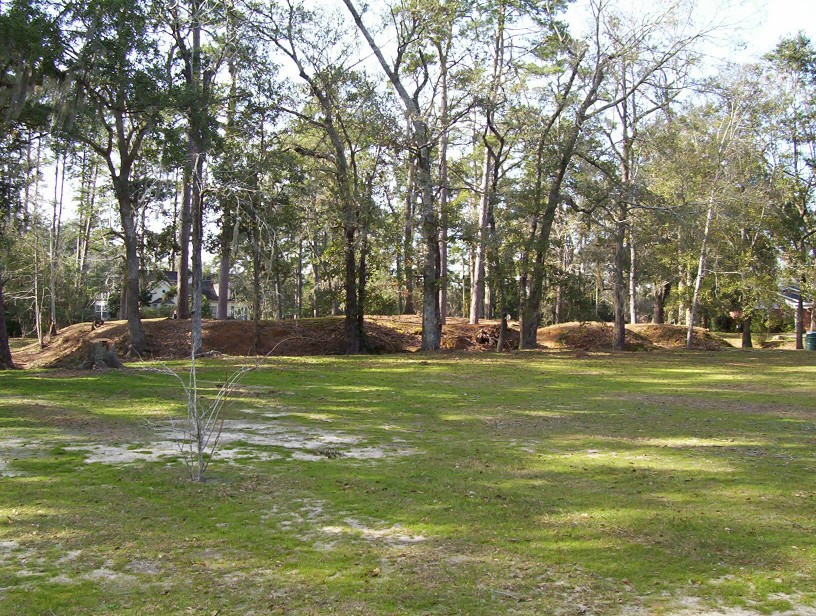
earthworks have long since disappeared, but at
least one - Fort Houston or "Old Fort" - can still be
seen. Located in Old Fort Park within cannon shot of
the old state capitol building, the fort originally
overlooked open fields that are now wooded
residential areas.
Confederate engineers also recognized that the
greatest threat to the city was of an attack by Union
troops coming up from Apalachee Bay. The primary
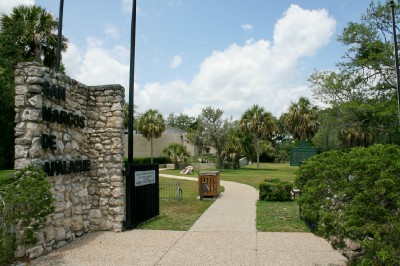
defense against this was Fort War, a battery
constructed earlier in the war onto the ruins of the
old Spanish fort San Marcos de Apalache. The fort
stood on the point of land at the confluence of the St.
Marks and Wakulla Rivers, where its guns could
engage any approaching warships from long range.
Although it was isolated in the marshes, however,
the fort was vulnerable to attack from the rear.
Engineers ordered the construction of earthen
breastworks to address this weakness and by
March of 1865 the fort had been entirely enclosed.
The bridge at Newport, just upstream from St.
Marks, was also fortified by the digging of a line of
entrenchments on the west bank from which
Confederate infantrymen could sweep the bridge
and a nearby deep ford should Union troops try to
get across.
Pickets were also stationed at the St. Marks
Lighthouse, the site of old Port Leon below Fort
Ward and Alligator Point where they could observe
any attempted landing of troops by the Union navy.
The small Confederate steam gunboat C.S.S. Spray
also patrolled the lower river.
This defensive preparations would play a critical role
in the Battle of Natural Bridge.
Northwest Florida city of Marianna. It was the
deepest penetration of Confederate Florida by
Federal troops during the entire Civil War and
sparked the engagement remembered today as the
.
The ease with which the Federals reached Marianna
and the destruction they achieved during the raid
there greatly alarmed military leaders in the state.
Although the Northwest Florida raid was never
intended to penetrate east of Marianna, they had no
way of knowing this and were forced to admit that
had the enemy continued to advance, there was little
that could have been done to stop them.
Consequently, Brigadier General William Miller in
Tallahassee undertook steps to improve the
defenses of the capital city. Fortifications were
constructed at key points around Tallahassee,
including strongly built forts from which artillery
could devastate any attacking force. Most of these
earthworks have long since disappeared, but at
least one - Fort Houston or "Old Fort" - can still be
seen. Located in Old Fort Park within cannon shot of
the old state capitol building, the fort originally
overlooked open fields that are now wooded
residential areas.
Confederate engineers also recognized that the
greatest threat to the city was of an attack by Union
troops coming up from Apalachee Bay. The primary
defense against this was Fort War, a battery
constructed earlier in the war onto the ruins of the
old Spanish fort San Marcos de Apalache. The fort
stood on the point of land at the confluence of the St.
Marks and Wakulla Rivers, where its guns could
engage any approaching warships from long range.
Although it was isolated in the marshes, however,
the fort was vulnerable to attack from the rear.
Engineers ordered the construction of earthen
breastworks to address this weakness and by
March of 1865 the fort had been entirely enclosed.
The bridge at Newport, just upstream from St.
Marks, was also fortified by the digging of a line of
entrenchments on the west bank from which
Confederate infantrymen could sweep the bridge
and a nearby deep ford should Union troops try to
get across.
Pickets were also stationed at the St. Marks
Lighthouse, the site of old Port Leon below Fort
Ward and Alligator Point where they could observe
any attempted landing of troops by the Union navy.
The small Confederate steam gunboat C.S.S. Spray
also patrolled the lower river.
This defensive preparations would play a critical role
in the Battle of Natural Bridge.
| Earthworks at Old Fort Park Tallahassee |
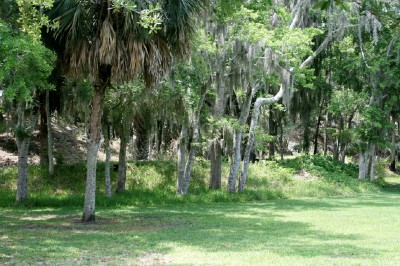
| Site of Fort Ward San Marcos de Apalache, St. Marks |

| Earthworks of Fort Ward San Marcos de Apalache, St. Marks |
| Modern Bridge at Newport St. Marks River, Florida |
Related Sites: